Specialized Training in Traditional Windsor Chair Making
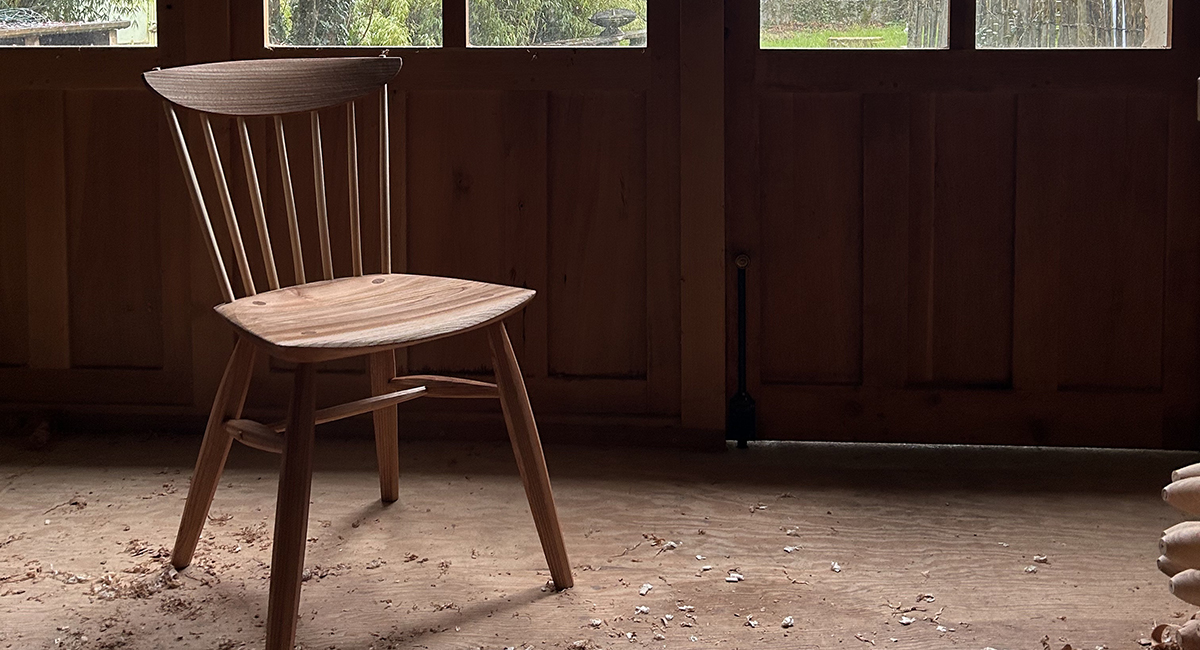
The Art of the Windsor Chair
Discover an Iconic Chairmaking Tradition
In October 2026, the École d’ébénisterie d’art de Montréal (ÉÉAM), in collaboration with the Conseil des métiers d’art du Québec (CMAQ), is pleased to welcome Félix Bouchet, a chairmaker based in France. An ÉÉAM graduate who further honed his craft in Vermont under second-generation master chairmaker George Sawyer, Félix will offer a specialized training workshop in traditional Windsor chairmaking.
Rooted in a rich tradition, this intermediate-level training will enable participants to:
- understand the principles behind Windsor chair construction;
- explore the techniques that define this specialized craft.
Each participant will build their own Low Back Side Windsor chair and leave with a completed piece at the end of the workshop.
Hands-On Learning Through Windsor Chairmaking
The Windsor chair holds an important place in the history of handcrafted chairmaking. Its construction combines specialized techniques that require an understanding of material behaviour, mastery of tools, and precision of handwork.
This training will allow participants to deepen their understanding of:
- the characteristics of the Windsor chair;
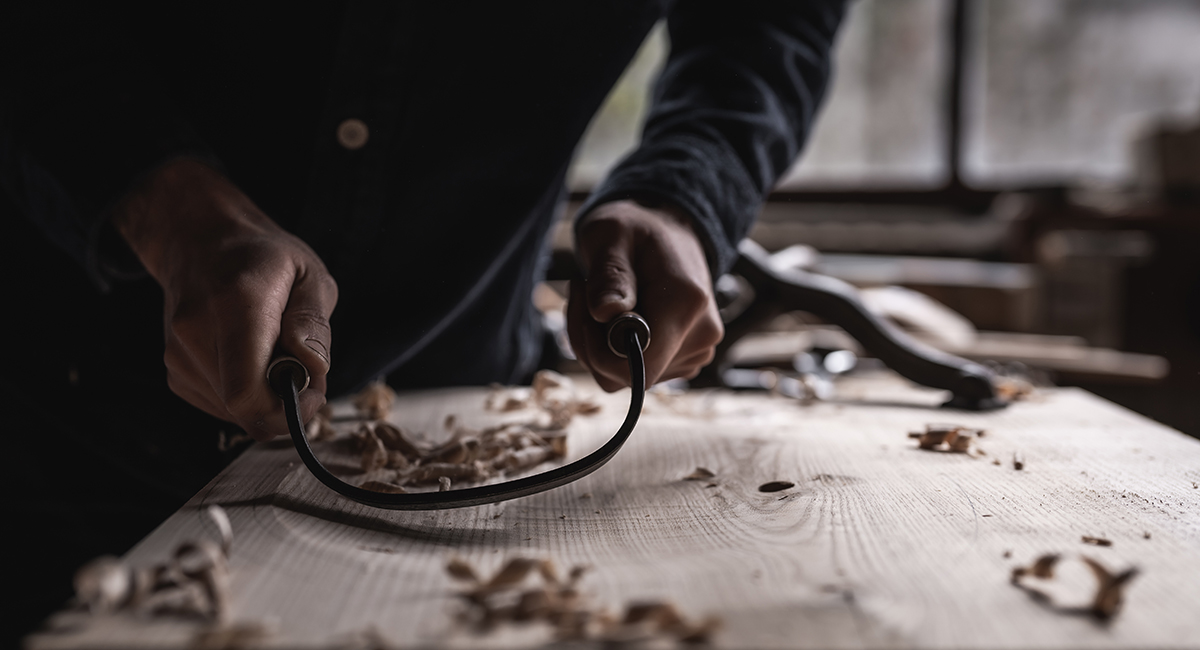
- shaping techniques using traditional tools;
- moisture control and green woodworking;
- steam bending;
- joinery techniques.
Who Is This Training For?
Prerequisites | Intermediate Level
This training is intended for professional fine woodworkers, furniture makers, and individuals with intermediate woodworking experience.
Minimum required level:
- successful completion of the first year of the Technical college training in fine woodworking;
- or completion of ÉÉAM’s Cursus technique I;
- or equivalent experience.
Practical Information and Registration
Duration : 35 hours (5 days)
Dates : October 13-17, 2026, from 9:00 a.m. to 5:00 p.m.
Location : ÉÉAM Workshops | 99 Chabanel Street West, Suite 301, Montréal
Number of Participants : Minimum 8, maximum 10
Fee : 400$ per person | Valued at approximately 2 000$ per participant, this specialized training is offered at a reduced rate thanks to the support of ÉÉAM and CMAQ, whose continuing education activities are supported through the Intervention-Compétences program administered by Compétence Culture with financial support from the Gouvernement du Québec.
PLEASE NOTE : This course is co-lingual (French–English), which means that francophone and anglophone participants form a single group and attend the same classes. The trainer adjusts the language of teaching to accommodate the group or alternates between French and English. All participants may speak the language of their choice, and the trainer will make sure that everyone understands the content.
It is not necessary to be bilingual to register, but basic understanding of both languages may be helpful. Because this course is based on manual work and individual exploration, it is particularly well suited to this way of working. We consider linguistic diversity an asset, and we ask that you show inclusiveness, kindness, and respect.
What’s Included
- Training and instruction provided by Félix Bouchet;
- Wood materials and other consumables;
- Specialized tools and equipment;
- Safety overshoes, hearing protection, and safety glasses available on loan if needed;
- Access to the cafeteria, microwave, and refrigerator;
- Coffee, tea, hot chocolate, and snacks;
- Certificate of completion presented on the final day.
What You Must Provide
- Your own safety shoes, hearing protection, and safety glasses, if you already own them;
- Your lunch;
- Transportation and accommodation costs, if applicable.
Registration Procedure
- Click the [Reserve Your Spot] button.
- Once on the Qidigo platform, click [Log In].
- Log in to your existing account or create one if necessary.
- Add the workshop to your cart and follow the registration process.
- Complete the prerequisite assessment form.
- Submit payment by credit card through Qidigo’s secure Paysafe payment platform.
IMPORTANT : Payment is required to confirm registration. Once payment has been completed, a receipt will be sent by email.
Learn from a Specialized Craftsperson
Félix Bouchet, Chairmaker
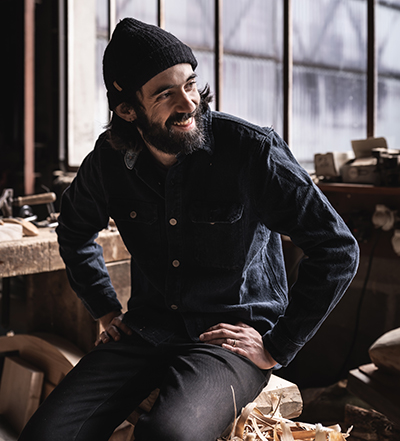
Originally from Touraine, France, Félix Bouchet first studied science before earning a degree in wood engineering in 2016. Drawn to manual craft and woodworking trades, he continued his training in Montréal at the Montreal School of Fine Woodworking (ÉÉAM), where his final project, two chairs, received the Excellence in Fine Woodworking Award.
Following this recognition, he spent fifteen months in Vermont apprenticing in the workshop of second-generation master chairmaker George Sawyer. This experience further deepened his practice of hand-tool woodworking and traditional chairmaking.
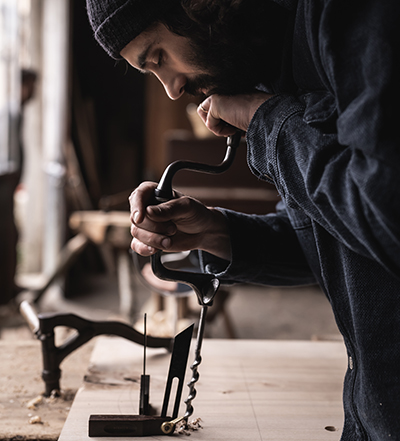
It is the mark of the maker’s gesture that gives a functional object, such as a chair, its unique character. Over time, that mark evolves and becomes a signature.
Félix Bouchet
Today based in Touraine, Félix Bouchet crafts handmade chairs and greenwood utensils. His practice places the gesture, the tool, and the material at the centre of the making process. His forms emerge directly in the workshop through a dialogue between hand, tool, and wood.
Training Offered in Collaboration with CMAQ
This training is offered in collaboration with the Conseil des métiers d’art du Québec (CMAQ). CMAQ’s continuing education activities are supported through the Intervention-Compétences program administered by Compétence Culture with financial support from the Gouvernement du Québec.
Terms and Conditions
Invalid Prerequisites
If it is determined that you do not possess the prerequisite skills or knowledge required to successfully and safely participate in this training, you will not be permitted to attend. ÉÉAM reserves the right to cancel your registration and apply the applicable refund policy.
Absence
No make-up sessions will be offered. The workshop is based on the progressive completion of a full Windsor chair, and missing part of the training may compromise both the participant’s project and the group’s overall progress.
Cancellation or Postponement
The training may be cancelled or postponed if the minimum number of participants is not reached. Cancellation and refund conditions are subject to the policies of the partner organizations. View ÉÉAM’s Terms and Conditions. View CMAQ’s Training Registration and Cancellation Policy.
Photo credits : Anne-Claire Héraud

L’art de la chaise Windsor
Découvrez un savoir-faire iconique en ébénisterie
En octobre 2026, l’École d’ébénisterie d’art de Montréal (ÉÉAM), en collaboration avec le Conseil des métiers d’art du Québec (CMAQ), a le plaisir d’accueillir Félix Bouchet, artisan chaisier établi en France. Diplômé de l’ÉÉAM et perfectionné au Vermont auprès du maître chaisier George Sawyer, il offrira une formation de spécialisation en fabrication traditionnelle de chaises Windsor.
Basée sur une riche tradition, cette formation de niveau intermédiaire permettra aux participant.e.s :
- de comprendre les principes de fabrication propres à la chaise Windsor;
- d’explorer les techniques qui caractérisent ce savoir-faire spécialisé.
Chaque participant.e fabriquera sa propre chaise Windsor « Low Back Side » et repartira avec la pièce terminée à la fin de la formation.
L’art de la chaise Windsor
Découvrez un savoir-faire iconique en ébénisterie
En octobre 2026, l’École d’ébénisterie d’art de Montréal (ÉÉAM), en collaboration avec le Conseil des métiers d’art du Québec (CMAQ), a le plaisir d’accueillir Félix Bouchet, artisan chaisier établi en France. Diplômé de l’ÉÉAM et perfectionné au Vermont auprès du maître chaisier George Sawyer, il offrira une formation de spécialisation en fabrication traditionnelle de chaises Windsor.
Basée sur une riche tradition, cette formation de niveau intermédiaire permettra aux participant.e.s :
- de comprendre les principes de fabrication propres à la chaise Windsor;
- d’explorer les techniques qui caractérisent ce savoir-faire spécialisé.
Chaque participant.e fabriquera sa propre chaise Windsor « Low Back Side » et repartira avec la pièce terminée à la fin de la formation.