Woodturning: Techniques, Tools and Tips
What is woodturning?
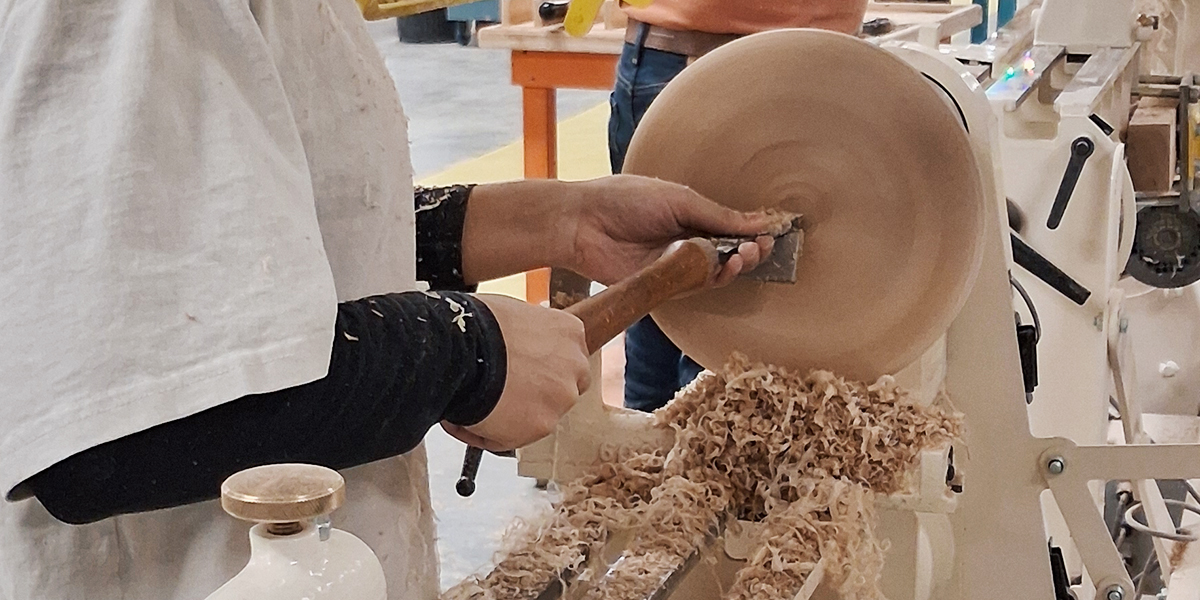
Woodturning is a technique used to shape a piece of wood with cutting tools while it rotates on its own axis. To do this, the wood is mounted on a wood lathe and driven by a motor in a rotating motion.
Woodturning makes it possible to quickly create a wide variety of rounded objects, whether decorative, functional or intended for furniture making. This practice offers great creative freedom and is distinguished by the direct relationship between the movement of the tool and the material: as the tool moves along the rotating wood, the desired shape gradually takes form.

What tools and equipment are used in woodturning?
The wood lathe
The wood lathe is the central piece of equipment used in woodturning. It holds the workpiece in place and rotates it using a motor. There are two main types of wood lathes:
The benchtop wood lathe: Generally smaller in size, this type of lathe is designed to sit on a workbench. It is also easier to move.
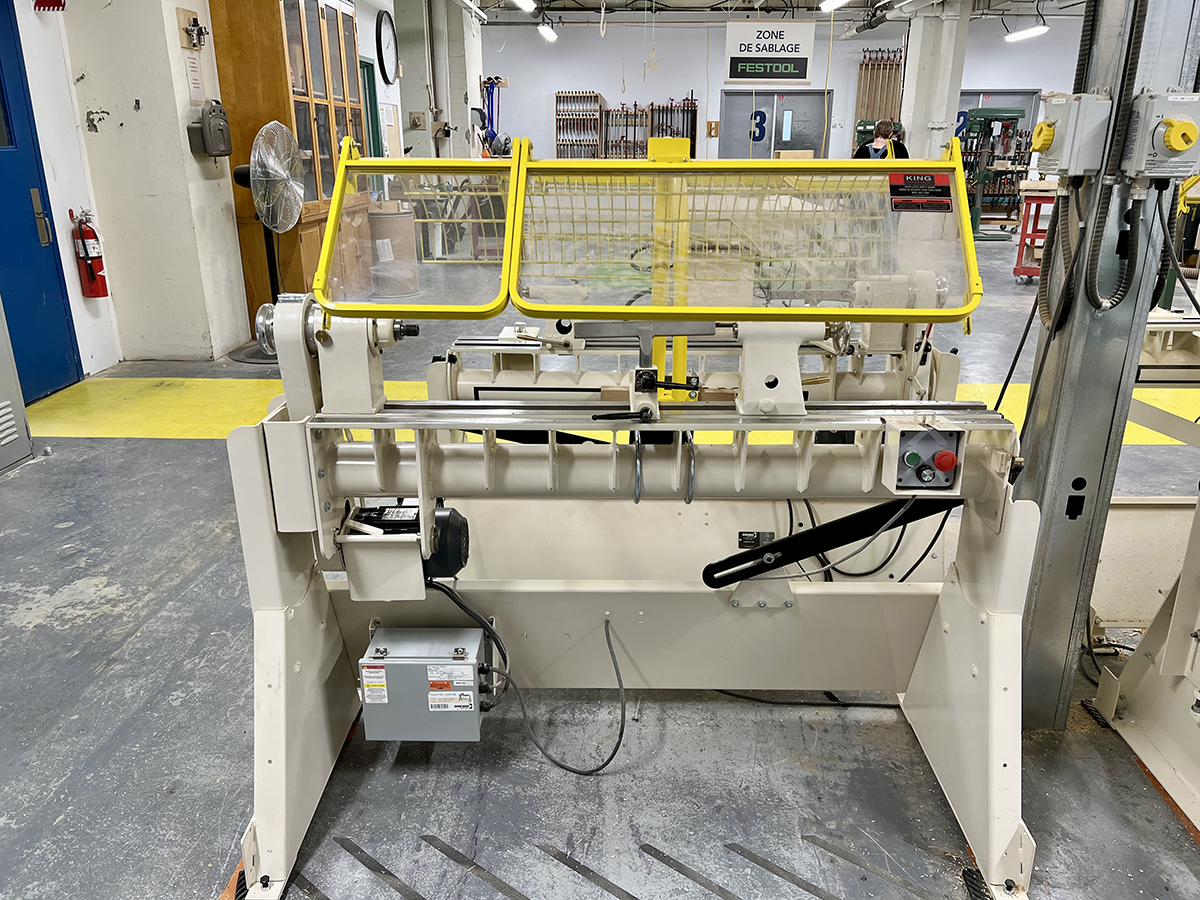
The floor-standing wood lathe: Generally larger and heavier, this lathe stands on its own and can accommodate larger workpieces.
The photo on the right shows a floor-standing wood lathe installed in the central workshop at the École d’ébénisterie d’art de Montréal.
Cutting tools
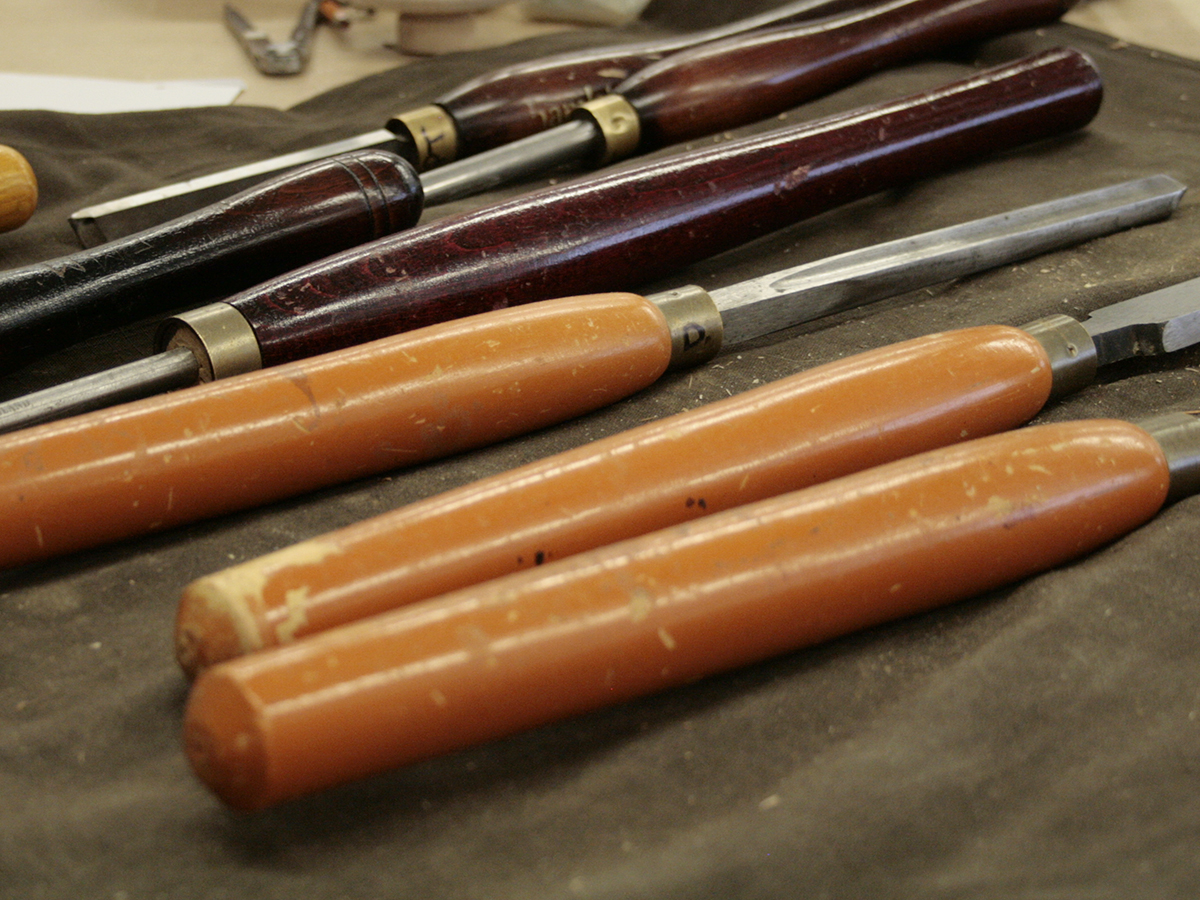
Cutting tools are used to shape the rotating wood. The main types include:
Chisels: They have a flat cutting edge and are used to create different cuts and shapes.
Gouges: Their rounded or curved cutting edge allows woodturners to hollow out and shape a variety of profiles.
Scrapers: They are used to remove irregularities, refine surfaces and reach difficult-to-access areas, such as the inside of vases.
The choice of tool depends on the desired shape and the stage of the process. Sharpening also plays an essential role: a well-sharpened tool makes cutting easier and helps achieve a quality surface.
Accessories
Depending on the object being made and the technique used, different accessories can be used to hold the workpiece on the lathe:
- Drive spur
- Chuck
- Faceplate or screw chuck
The choice of accessory depends on several factors, including the shape of the workpiece and how it needs to be held during turning.
If you’re unsure which accessories to use, advice from an experienced woodturner can be helpful. Don’t hesitate to ask your specialist tool retailer for guidance or sign up for a woodturning course.
What are the main woodturning techniques?
How the workpiece is mounted on the lathe largely determines the shaping possibilities. There are two main approaches: spindle turning and faceplate or chuck turning.
Spindle turning
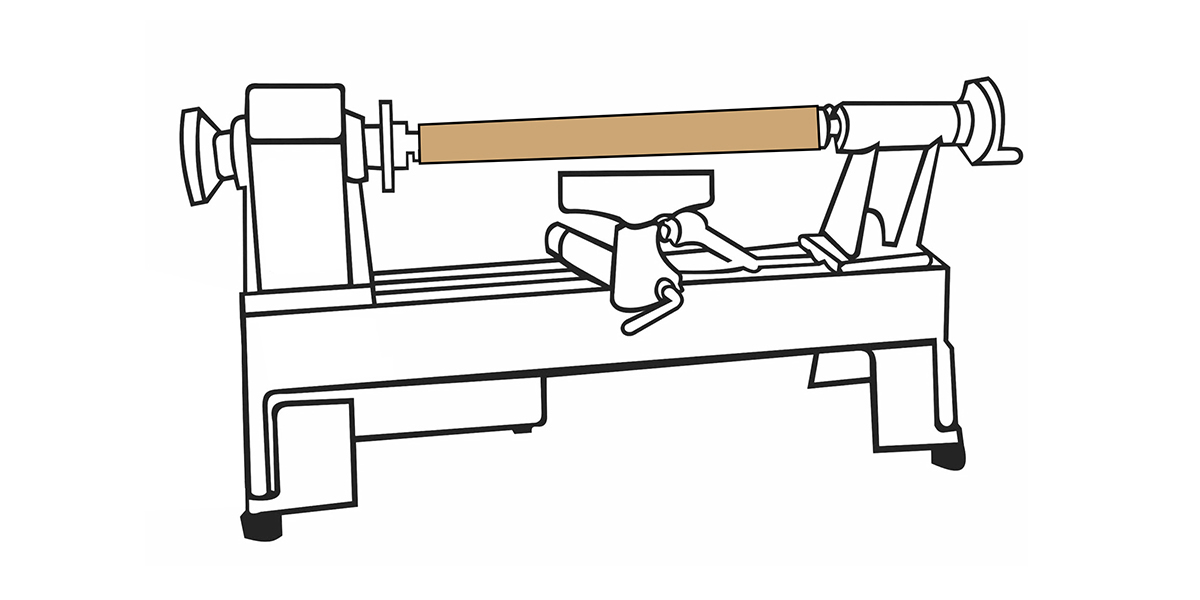
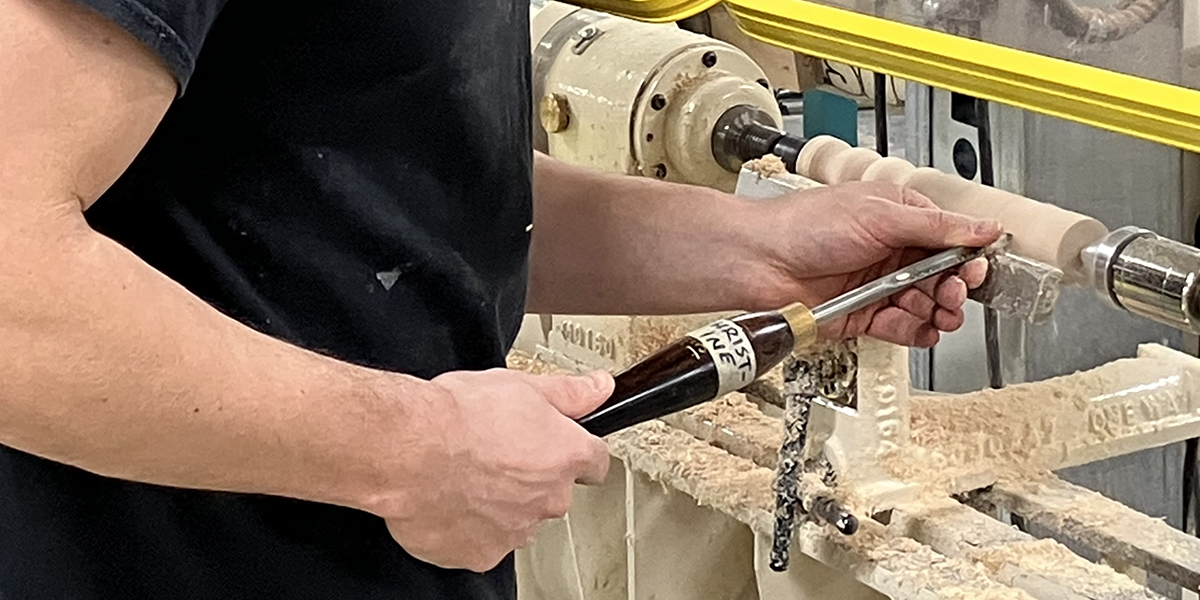
In spindle turning, the piece of wood is held between two centers at either end. It rotates along its length, and the wood is generally worked with the grain, meaning the wood fibres run parallel to the axis of rotation.
This technique is particularly suited to making elongated pieces and cylindrical shapes, such as furniture legs, handles, candlesticks and certain decorative objects.
Faceplate or chuck turning
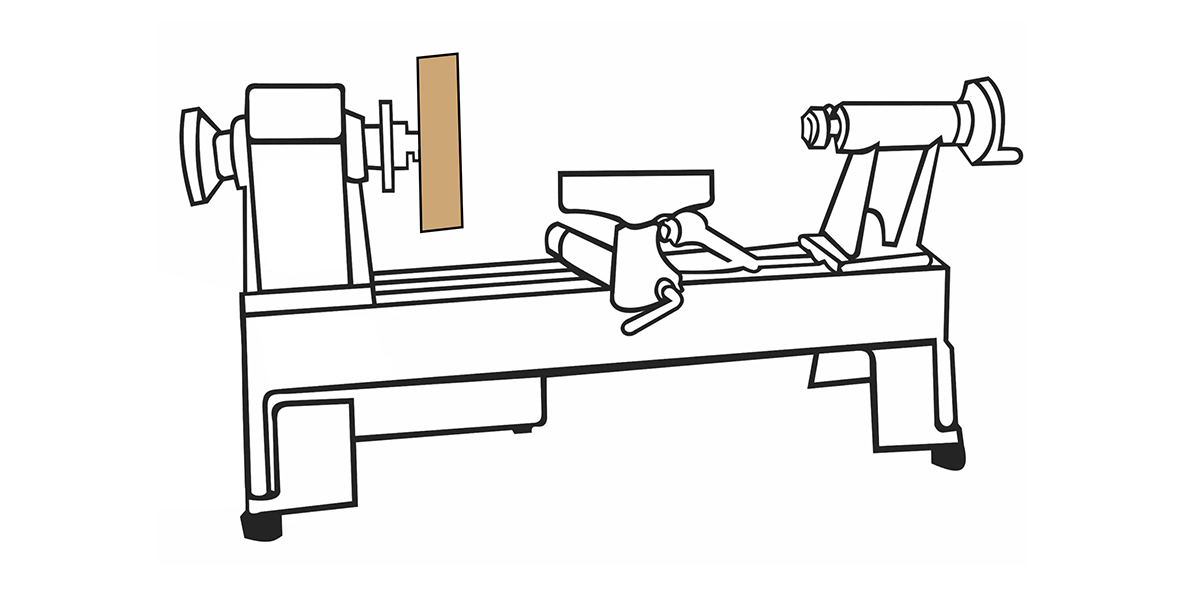
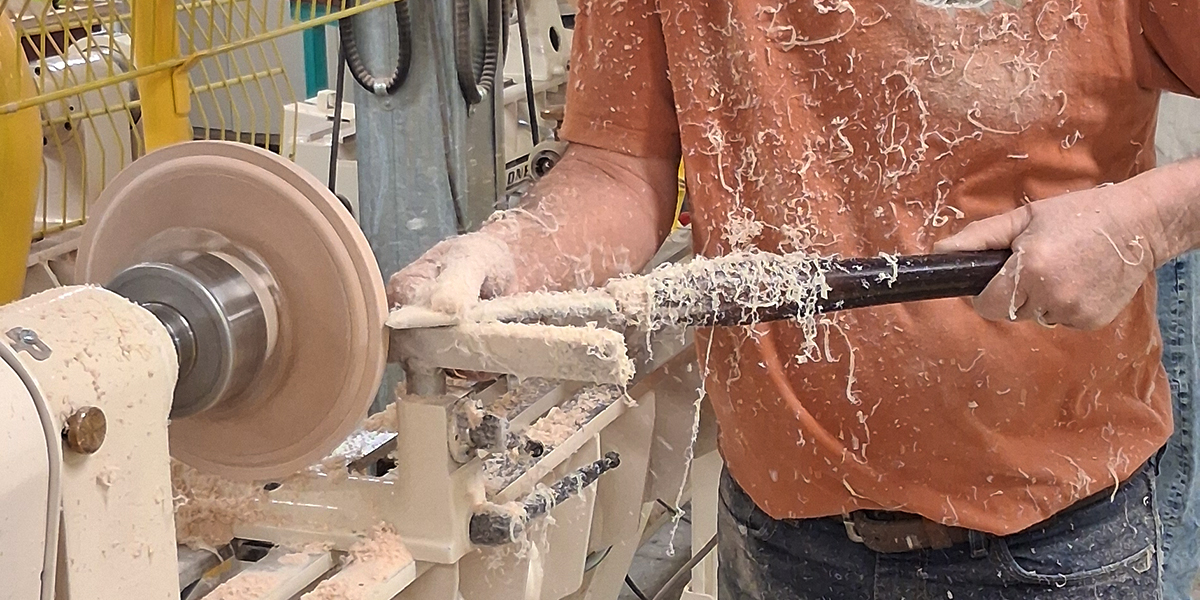
With this technique, the workpiece is attached to the lathe at one end using a chuck or faceplate. This allows the wood to be worked across the grain.
This approach makes it possible to shape wider, hollow objects such as bowls and plates. Turning a bowl involves gradually shaping both the outside and inside of the workpiece to achieve the desired form and thickness.
What can you make with a wood lathe?
Decorative and functional objects
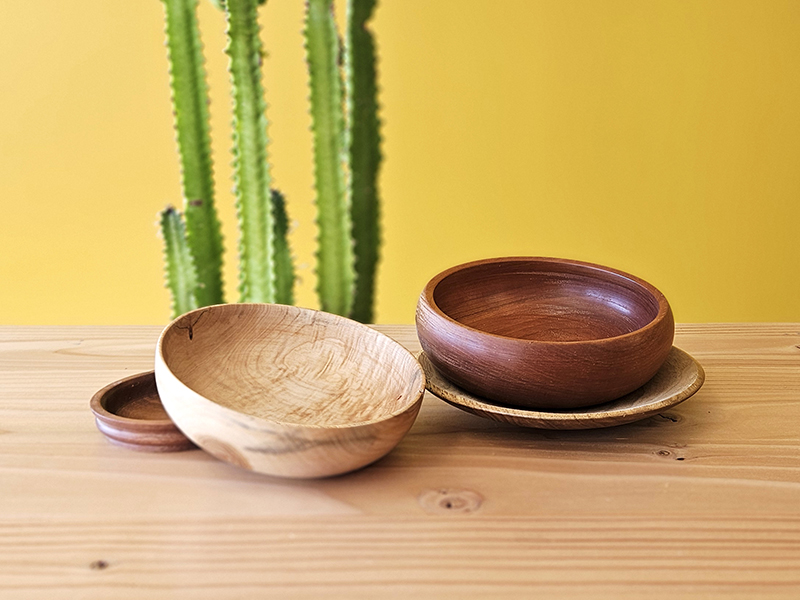
Woodturning makes it possible to create a wide variety of objects, from bowls, plates and containers to toys and decorative pieces. It offers many possibilities for shapes and designs that can be adapted to different uses. Depending on the project, various finishes can be applied to protect the wood surface and enhance its grain.
Objects incorporating mechanisms
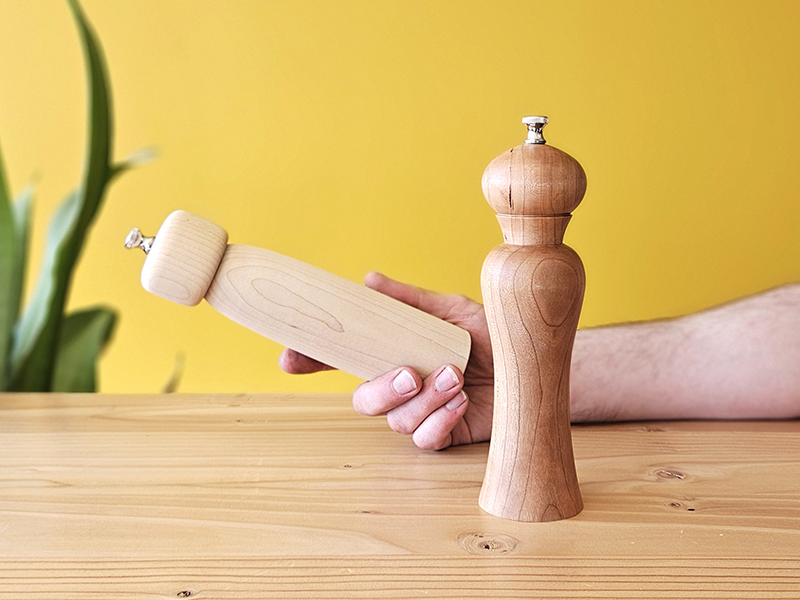
Woodturning can also be used to make functional objects that incorporate mechanisms or specialized components. Examples include pepper mills, pens and certain types of lamps. Making these objects involves additional steps, such as drilling, fitting components and integrating the mechanism to ensure that all parts work together properly.
Furniture components and joinery
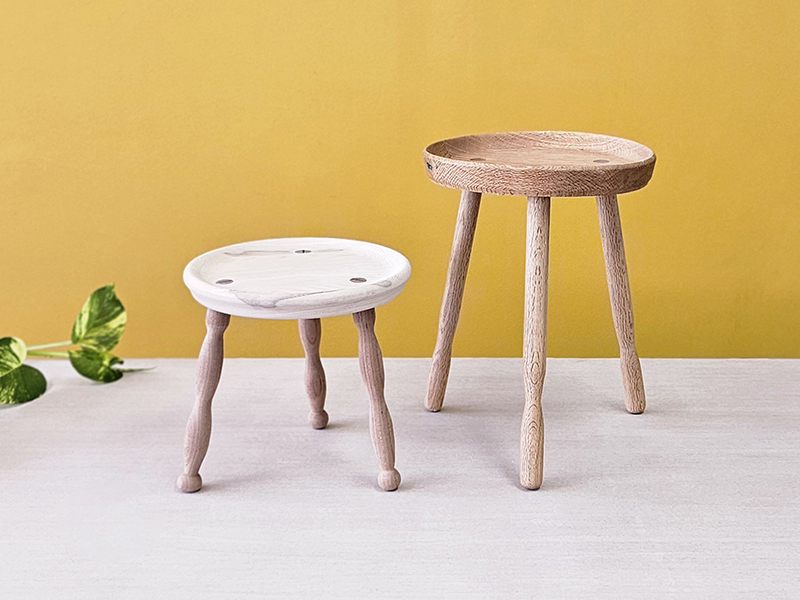
Woodturning also has applications in furniture making, particularly for producing legs, posts and stretchers. It can also be used to create certain joints, such as a round tenon shaped at the end of a rotating workpiece. These techniques make it possible to join several turned components to create furniture, such as a stool or a small table.
What wood should you choose for woodturning?
The choice of wood depends on the project, the turning technique and the desired result. Several characteristics should be considered when selecting a suitable wood species:
Hardness: Softwoods are generally easier to shape, while hardwoods may require greater precision and well-sharpened tools. However, they can produce fine, durable surfaces.
Grain: A regular grain makes it easier to work the wood and create details. Conversely, irregular grain or pronounced patterns can make turning more challenging, while also producing interesting visual results.
Moisture content: Moisture content affects how wood behaves during and after turning. Dry wood is more stable, while green wood, which still contains a high amount of moisture, may warp or crack as it dries.
Appearance: The colour, grain patterns and natural markings of the wood contribute to the finished object’s appearance. These characteristics can help guide the choice of wood species according to the project.
Softwoods such as pine can be suitable for certain introductory exercises. Hardwoods such as ash, birch, maple and cherry offer other possibilities in terms of shaping and finishing.
Green woodturning
Green woodturning involves working with freshly cut wood that still contains a high amount of moisture. Softer than dry wood, it is generally easier to shape and produces less dust during turning.
This practice also makes it possible to observe how wood reacts as it dries. As it loses moisture, the material shrinks, which can cause warping or cracking. A bowl that was initially round, for example, may become oval.
To account for these changes, some pieces are turned in a single session, while others are first rough-turned and left to dry before being turned again to achieve their final shape.
What safety precautions should you take when woodturning?
Woodturning requires following safety guidelines specific to working with rotating machinery. Before starting, it is essential to check that the workpiece is securely mounted on the lathe and that the tools are suitable and properly sharpened.
You should also wear the recommended personal protective equipment (PPE), including eye and hearing protection. Long hair must be tied back, and loose clothing, jewellery and anything that could get caught in the rotating workpiece should be avoided.
The spindle speed must be adjusted to the size and type of workpiece. Proper tool rest positioning and controlled movements are also important. Finally, the lathe must come to a complete stop before measuring, adjusting or handling the workpiece.
Learning under supervision helps you understand how the equipment works and gradually develop safe working habits.
How can you get started in woodturning?
Woodturning is learned progressively, starting with an introduction to the lathe, tools and basic techniques. With practice, you can develop greater precision and explore increasingly complex shapes and projects.
The École d’ébénisterie d’art de Montréal offers public courses for those interested in learning woodturning, from making a first bowl to creating functional objects or furniture incorporating turned components. For those looking for a structured learning program, the Cursus Tournage EN offers a progression through four courses, with guidance from professional woodworkers.
Learning steps of the Cursus Tournage EN in woodturning
Explore the 4 courses included in the program to discover the key skills developed at each step and the projects you will complete.

Photo credits: Alexandra D. Phaneuf, François Gicquel, ÉÉAM