


La touche finale 1 EN • Water-based varnishes, oils, and waxes
Choose and apply wood finishes
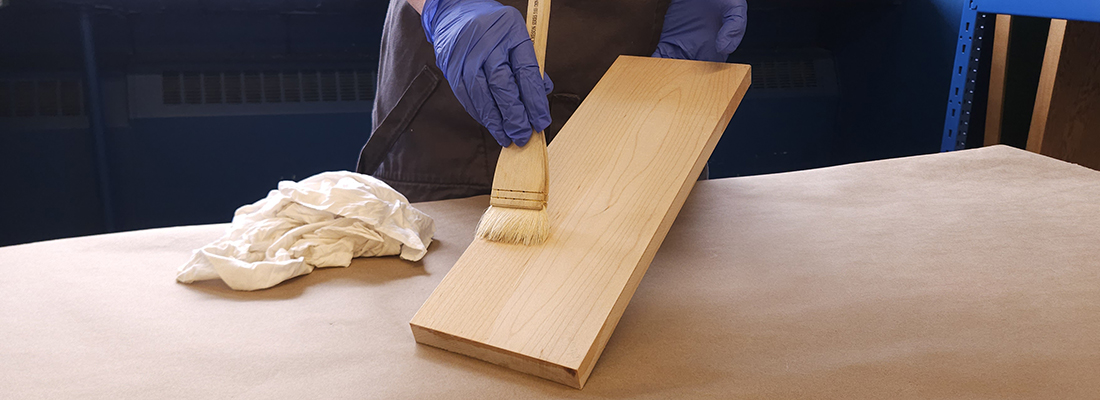
This course introduces you to the main products used for finishing woodworking projects, as well as the key steps for preparing the wood and applying a high-quality finish. After testing the finish on practice boards, apply the finish you’ve chosen from the available options to your own woodworking project.
To do so, you must bring a small project you previously completed in one of our courses (examples: a project from L’apprenti.e 1 EN course or a coffee table from L’apprenti.e 3 EN course). If you do not have a small project from one of our courses, you can purchase a small box on-site at the school store for $23, payable by card.
Prerequisites for the course
Level 1 course – No prerequisites
Number of sessions
2 sessions
Training duration
12 hours
Cost
350 $ + txs
Finishing wood course in pictures

Schedule
Group 1
Saturday, April 25 and May 2, 2027, 9 AM to 4 PM
These dates don’t work for you? Find a course that fits your schedule.
Answers to frequently asked questions about wood finishing
Why apply a finish to a wood project?
Applying a finish to a wood project protects the surface from wear, moisture, and stains, while enhancing the grain and color of the wood. It is an essential step in ensuring the durability and aesthetic appeal of the piece.
In the course La touche finale 1 EN, you will explore the effects of the main finishing products through hands-on exercises before applying them to your own project. This will enable you to effectively protect your woodworking projects while enhancing their appearance.
Which finish should you choose: varnish, oil, or wax?
The choice of a wood finish depends on the project’s intended use (the level of protection required) and the desired characteristics.
Water-based varnish provides a durable finish that dries quickly and does not yellow over time. Oil penetrates deep into the wood, nourishes the fibers, and enhances the grain with a matte to satin finish. Wax is primarily used as a final protective layer and to add shine, but it is more susceptible to water and is often applied to a surface that has already been sealed.
This course allows you to compare and test these finishing products in a practical setting.
How do you apply varnishes without streaks or smudges?
To achieve a flawless finish, it is essential to properly prepare the surface and apply the coats correctly. The wood must be carefully sanded and prepared. Water-based varnish should be applied in the direction of the wood grain, with light sanding between coats.
You will learn the techniques for surface preparation, sanding, graining, and application that help prevent streaks and ensure a clean, professional finish.
Course plan
- Sanders
- Rags and accessories
- Basic safety concepts in the finishing shop
- Repairing minor defects with putty
- Raising the grain
- Surface preparation
- Sealing and filling the grain
- Making a pigmented oil stain
- Applying and layering coats
- Sanding between coats
- Materials and tools needed to carry out exercises and/or projects
- Course notebook
- If necessary, loan of hearing protectors and safety glasses
IMPORTANT: You must bring a small project you previously completed in one of our courses (examples: a project from L’apprenti.e 1 EN course or a coffee table from L’apprenti.e 3 EN course). If you do not have a small project from one of our courses, you can purchase a small box on-site at the school store for $23, payable by card.
If you have one, you can bring:
- a dust mask
- hearing protectors
- safety glasses
- safety shoes
Schedule for the wood finishing course
- Presentations, course objectives and project
- Basic safety concepts in the finishing shop
- Presentation on surface and wood preparation
- Explanation and preparation of exercise boards and personnal project
- Raising the grain and sanding by machine and by hand
- Preparation and application of sealing products
- Presentation and application of 1st finishing coat
- Revision and questions
- Presentation of products : water based varnish, oils, hard oils and waxed oils, waxes
- Principles of impregnation and layering coats
- Presentation, creation and application of a pigmented oil stain
- Application of 2d and 3d finishing coat, sanding between coats
- Revision and questions
- Final application of protective finishes on the pieces
Woodworking training programs
This course is part of a program bringing together a series of courses that allow progressive and in-depth learning of cabinetmaking techniques.

Participants
Unless otherwise specified, ÉÉAM general public courses are only open to people 18 years of age and older.
As openness and inclusion are essential values for the ÉÉAM, the school strives to accommodate everyone who is interested in cabinetmaking. If you live with a functional limitation and have questions regarding your ability to attend training, please contact us to discuss.
